In short:
- Road construction work zones are among the most hazardous environments in the industry, combining moving traffic, heavy equipment, and workers on foot in close proximity.
- Every work zone needs a transportation management plan and a site-specific safety program before work begins.
- PPE in work zones goes beyond a hard hat. High-visibility clothing meeting ANSI Class 2 or 3 standards is required for all personnel.
- Situational awareness and blind spot avoidance are the most important daily habits for workers on foot in active work zones.
- Heat illness is a serious and underestimated risk for road construction crews working on or near asphalt.
Road construction work zones are one of the most hazardous environments in the construction industry. Workers are exposed to moving traffic, heavy equipment, extreme heat, and constantly changing conditions, often all at once.
The good news is that most of these incidents are preventable. Here are 10 safety practices every road construction contractor and crew member should follow.
1. Have a Plan Before Work Begins
Every road construction project needs a transportation management plan in place before crews arrive on site. That plan should include two components:
- A temporary traffic control plan that protects workers by safely routing traffic around or through the work zone.
- A work zone traffic control plan that manages the flow of heavy equipment, construction vehicles, and workers within the site itself.
Without both, you're relying on workers to figure out safety on the fly, which is how incidents happen.
2. Properly Control Work Zones
A compliant road construction work zone has five distinct areas:
- Advanced warning area: signs alerting drivers to upcoming changes in road conditions
- Transition area: traffic control devices managing lane closures and pattern shifts
- Buffer area: a separation zone between traffic and active work
- Work area: where construction activity takes place
- Termination area: where traffic returns to normal, marked with a clear end-of-work-zone sign
3. Create Separate Work Areas Within the Zone
Work zones typically have multiple activities happening at the same time. Without clear separation, workers on foot, heavy equipment, and material storage areas can overlap in ways that create serious hazards.
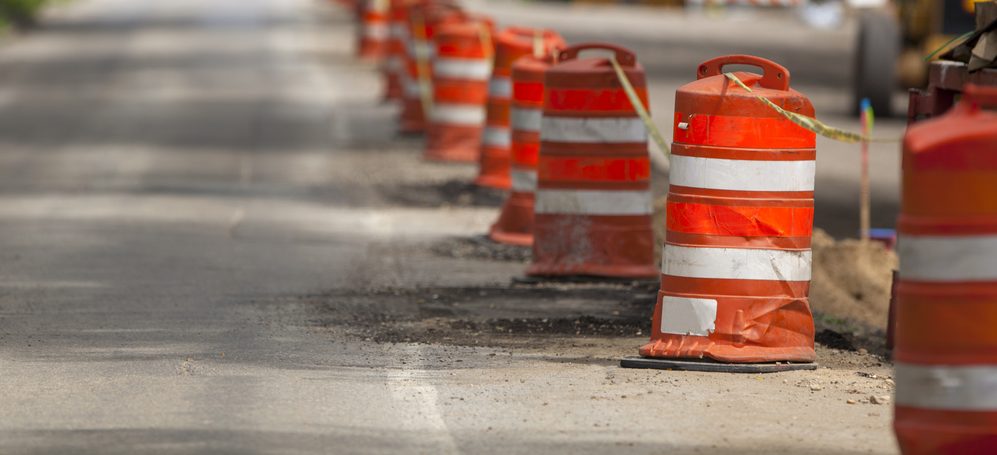
Use cones, barrels, and barriers to clearly delineate:
- Material storage areas
- Zones where heavy equipment is operating
- Vehicle parking
- Designated walking paths for workers on foot
Visual separation is not just an organizational preference. It's a safety requirement.
4. Require Appropriate PPE in Road Construction Work Zones
All personnel inside the work zone must wear appropriate PPE at all times. Requirements include:
| PPE Item |
Standard |
| Hard hat |
ANSI Z89.1 |
| Steel-toed boots |
ASTM F2413 |
| High-visibility vest, jacket, or shirt |
ANSI/ISEA Class 2 or Class 3 |
| Hearing protection |
Required where noise levels exceed OSHA thresholds |
| Safety glasses |
ANSI Z87.1 |
High-visibility clothing must be bright fluorescent orange or lime/yellow with reflective material. Class 3 is required for nighttime work or high-speed roadways. All PPE must meet or exceed standards set by the American National Standards Institute (ANSI).
5. Be Aware of Your Surroundings at All Times
Situational awareness is one of the most important habits a worker can build in a road construction environment. At a minimum:
- Never walk behind vehicles that may be reversing.
- Stay out of the swing radius of excavators and other rotating equipment.
- Face traffic whenever possible, or use a spotter when your back is turned.
- Use spotters to monitor both equipment movement and incoming traffic simultaneously.
Work zones are dynamic. Conditions change throughout the day, and complacency is one of the leading contributors to incidents.
6. Avoid Blind Spots
Heavy equipment operating in work zones (dump trucks, compactors, pavement planers, excavators, pavers, and rollers) all have significant blind spots. A driver who can't see you won't stop for you.
For operators: check that all mirrors and visual aids are properly attached and functioning, including backup alarms and lights, before beginning work each day.
For workers on foot: always maintain visual contact with equipment operators. A simple rule that works in practice: if you can't see the driver's face, they can't see you. Stay where you're visible or wait until the equipment has passed.
7. Have a Competent Person on Site
Per OSHA, a competent person is someone capable of identifying existing and predictable hazards in working conditions and who has the authority to take corrective action immediately. Every work zone must have one present whenever work is being performed.
The competent person is responsible for:
- Conducting hazard assessments and routine site inspections
- Selecting the appropriate class of PPE for each work activity
- Approving traffic control devices and their placement
- Receiving and acting on hazard reports from other workers
Workers should know who the designated competent person is and how to report unsafe conditions to them directly.
8. Start Each Workday with a Safety Meeting
Conditions in a road construction work zone can change significantly from one day to the next. A brief safety meeting before work begins each day ensures that every worker starts the shift with current information.
Cover the following at each daily meeting:
- The work activities planned for the day and any associated hazards
- Any changes to the work zone layout or traffic control setup
- Current PPE requirements for the day's tasks
- Any new personnel on site who may need orientation
These meetings don't need to be long. Even 10-15 minutes is enough to cover the essentials and confirm everyone is prepared.
9. Create a Site-Specific Safety Program
No two road construction projects are identical. A generic safety program won't account for the specific hazards, layout, and conditions of each site. Every project should have a safety program written for that site specifically.
A complete site-specific safety program should include:
- Identification of all known hazards and the control measures in place for each
- Schedules for routine inspection of all equipment and materials
- A first aid and emergency medical care plan, including the location of the nearest trauma center
- Safety training schedules for all employees
The program should be reviewed and updated as site conditions change throughout the project.
10. Take Heat Illness Seriously
Road construction crews face heat exposure at a level most other construction workers don't. Asphalt absorbs up to 95% of solar radiation, and surface temperatures can run 30 to 50 degrees Fahrenheit higher than the surrounding air temperature. Workers kneeling, bending, or working close to the surface face direct radiant heat exposure on top of ambient air temperature.
Heat exhaustion and heatstroke can develop quickly and become life-threatening without fast intervention. Prevention requires active management, not just telling workers to drink water:
- Provide access to cool water and electrolyte drinks throughout the shift.
- Schedule the most physically demanding tasks for cooler morning hours when possible.
- Rotate workers out of direct sun and heat exposure regularly.
- Train crew leads and supervisors to recognize early signs of heat illness.
When air temperature is extreme, consider suspending work during peak heat hours rather than pushing through.
Road construction contractors need the right projects to keep crews working. ConstructConnect's Project Intelligence helps you find and track commercial projects in your market before they go out to bid. Schedule a demo today to see how it works.
Frequently Asked Questions (FAQs)
What PPE is required for workers in a road construction work zone?
Workers in road construction work zones are required to wear hard hats, steel-toed boots, safety glasses, and high-visibility clothing. High-visibility vests or jackets must be bright fluorescent orange or lime/yellow with reflective material, and must meet ANSI Class 2 or Class 3 standards depending on the roadway speed and conditions. Hearing protection is also required where noise levels exceed OSHA thresholds.
What is a transportation management plan and why is it required?
A transportation management plan (TMP) is a document that outlines how traffic, both on the public roadway and inside the work zone, will be controlled and managed throughout a road construction project. It includes a temporary traffic control plan for routing drivers safely through or around the work zone, and an internal plan for managing equipment and worker movement within the site.
What is a competent person in construction and what are they responsible for?
Per OSHA, a competent person is an individual who can identify existing and predictable hazards and has the authority to take immediate corrective action. In a road construction work zone, the competent person is responsible for conducting hazard assessments, selecting appropriate PPE, approving traffic control devices, and responding to safety concerns raised by workers. At least one competent person must be on site whenever work is being performed.
How do you prevent heat illness on a road construction job site?
Preventing heat illness on road construction sites requires scheduled water and rest breaks, rotation of workers away from high-heat areas, and training supervisors to recognize early symptoms of heat exhaustion and heatstroke. Because asphalt surface temperatures can be 30 to 50 degrees hotter than the air temperature, workers on or near the surface face significantly elevated risk. The most intense physical work should be scheduled for cooler morning hours whenever possible.