In short:
- Construction job leads are early signals of upcoming projects, spanning planning, bidding, and awarded stages.
- Building a consistent pipeline involves creating a system that focuses on project discovery, qualification, and relationship tracking.
- ConstructConnect® Project Intelligence includes 825K+ active projects and Modernized Search filters so you find the right leads faster.
When your pipeline is full, you can be selective about which projects to pursue. When it’s empty, you’re scrambling to bid on any project, which sometimes means taking on jobs with thin margins.
The contractors who maintain consistent work don’t rely on luck. They build a system that helps with project discovery, qualification, and relationship tracking. If you’re looking to build a steady pipeline for your own business in 2026, keep reading.
What is a construction job lead?
A construction job lead is any early-stage signal that a project may be available to bid on. These signals can range from permit filings, planning commission approvals, project database listings, or direct invitations from a general contractor.
Not all leads are the same. Understanding the different types will help you decide where to spend your energy.
| Three Main Types of Construction Job Leads |
| Planning Stage Leads |
Projects still in design or permitting. These give you plenty of time to act. You can use this time to build trust with the owners, architects, and GCs before bidding starts. |
| Bidding Stage Leads |
Projects actively soliciting bids. These require fast action from your team. You will need to get the plans, specs, and a qualified estimate within a few days or weeks. |
| Awarded Leads |
Projects already under contract. Track these jobs to help you build relationships. A competitor may have won today, but staying visible means you could win the next project from that same GC. |
Where do construction job leads come from?
The best contractors don’t wait for work to find them. They tap into multiple lead sources to catch projects early. Here are reliable places to find commercial construction job leads:
Government Procurement Portals
Federal projects show up on official government websites. State and local jobs appear on state-specific portals. Government work oftentimes can take longer to start and have stricter compliance requirements, but the payment terms are reliable. To plan for these jobs, you should understand public sector bid seasonality for 2026.
Building Permit Data
City and county permit filings are public records. Watching the permit filings in your area gives you an early look at private projects. You can spot these jobs long before they show up on public bid boards. Many contractors miss this source entirely.
Commercial Project Databases
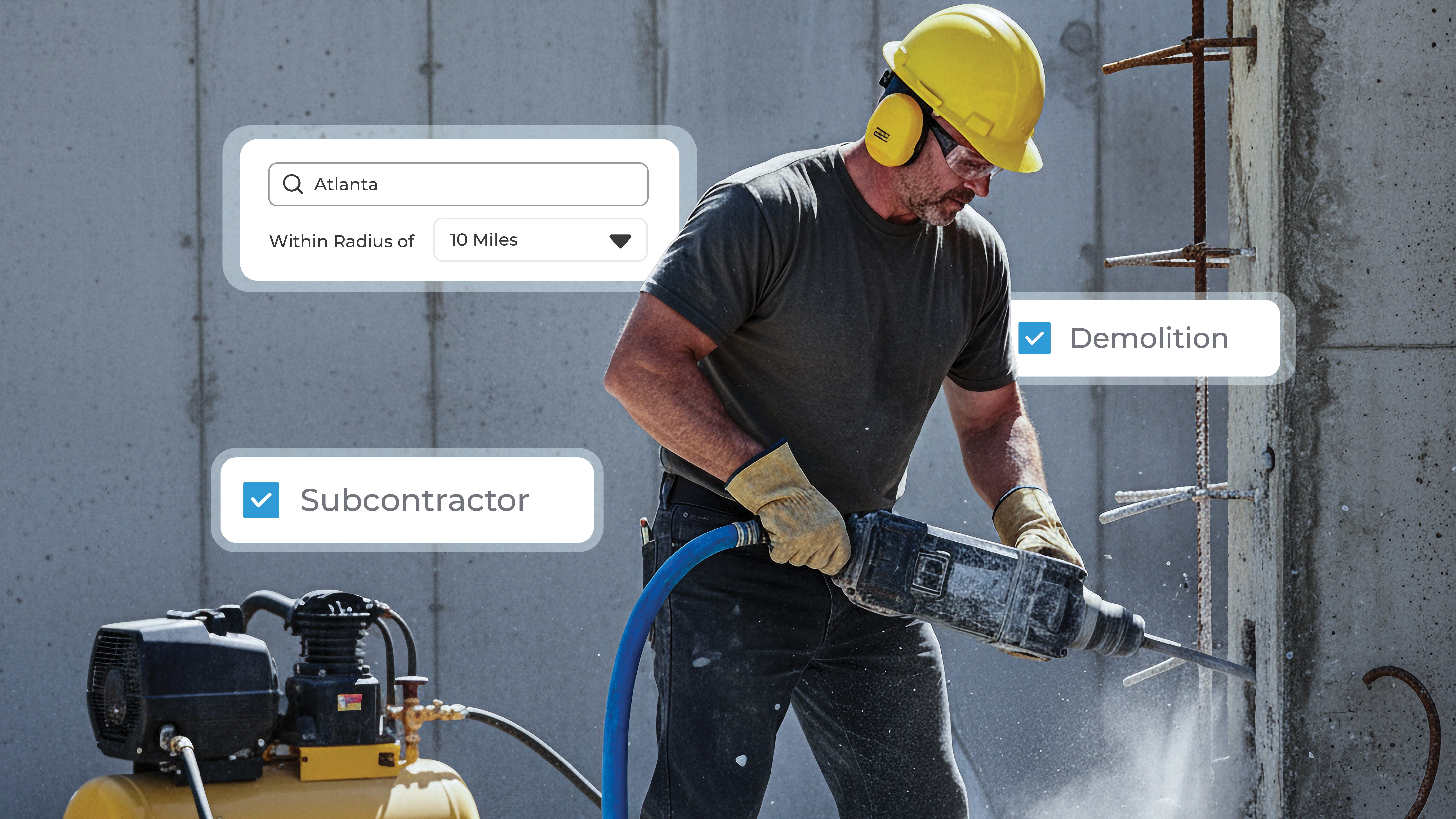
Platforms like ConstructConnect Project Intelligence gather commercial construction projects at every stage, from early planning through final award. With access to 825,000+ active projects, you can quickly filter by trade, location, project type, size, and more—so your pipeline isn’t just full of jobs, but full of the right opportunities. Learn more about Modernized Search for Project Intelligence and how easy it is to quickly find the projects that work for you.
How do you build a consistent lead pipeline?
Consistency comes from treating leads as a system, not a side task. The best approach to a consistent lead pipeline includes three important steps.
Step 1: Discovery
Don’t try to monitor everything manually. Set up automatic alerts on your construction lead platforms. This way, new project opportunities land right in your email inbox every morning. Focus your alerts on your specific trade, geographic service area, and size.
Step 2: Qualification
Not every lead deserves a bid. Before you download plans and start takeoffs, run it through a qualification filter (more on this below). Estimating time is your most valuable resource. Spend it on projects you can actually win.
Step 3: Relationship Tracking
Construction is a relationship business. The GC who didn’t select you on the last project might invite you to the next one if you stay on their radar. Tools like Project Intelligence make it easy to track relationships by allowing you to:
- Respond to direct invitations to bid from Project Intelligence project pages and have those submissions tracked in Bid Center.
- Track which GCs, subs, and owners consistently appear on projects in your trade and geography.
- Spot repeat builders in your market using company project portfolios and project history.
- Save and tag searches so new projects with your preferred partners land in your inbox automatically.
- Add internal notes and reminders on companies and projects so you always follow up on key relationships.
How do you qualify a construction lead before bidding?
Putting together a bid costs money. You have to pay your team for hours of hard work. Before you invest that time, run every lead through this simple 6-question qualification checklist:
- Is the project in your geography? If it’s outside of your normal service area, factor in travel costs, lodging, and the difficulty of managing a remote job.
- Is it in your trade/specialty? Sticking to what you know keeps your profits high and your mistakes low.
- Is the project the right size? Make sure you have the money and insurance to cover a job of this size.
- Do you have a relationship with the GC or owner? If you've never worked with them, your chances drop significantly. Consider whether it's worth bidding to get on their radar for future work.
- Is the timeline realistic for your current workload? Winning a project you can't staff or execute on time damages your reputation. Be honest about capacity.
- Is the margin potential worth the investment? Some projects are low-margin by nature (government work, design-build, hard bid). If the numbers don't work in your favor, walk away.
Start Building Your Lead Pipeline Today
Having a consistent lead pipeline doesn’t happen by accident. You need to discover projects early, qualify them carefully, and build relationships with the people in charge.
Contractors who master this system stress less about running out of work. They build steady momentum, choose the right projects, and grow their businesses without the scrambling.
Ready to build your pipeline? Start searching for commercial construction leads with Project Intelligence and get a taste of how easy it can be to secure your next job lead.
Frequently Asked Questions (FAQs)
What's the best source for commercial construction leads?
There's no single "best" source. The most successful contractors use a combination. Commercial project databases like ConstructConnect Project Intelligence provide the widest coverage and earliest visibility. Supplement with GC bid networks and direct relationships with repeat clients.
How do I get construction leads without cold calling?
Set up automated alerts on project databases and bid networks. Configure filters for your trade, geography, and project size. Leads will come to you daily without manual searching or cold outreach.
What’s the difference between a lead and a bid invitation?
The terms get used interchangeably, but there's an important distinction. A lead means you found the project through research, alerts, or networking. You initiate contact with the GC, owner, or architect to express interest. A bid invitation (ITB) means the GC found you and invited you to bid. They initiate contact, often through a bid network or direct email.