In Short:
- What is MasterFormat?
Learn how this standard system organizes construction documents with a universal language that gets everyone on the same page.
- How the Code Works
Discover how MasterFormat’s numerical structure creates a clear hierarchy for project information, making it easy to find specific details quickly.
- Why Mastery Matters
Understand how a deeper knowledge of MasterFormat leads to cleaner bids, sharper estimates, and better management of labor shortages.
- Finding the Right Projects Faster
Use tools like ConstructConnect Project Intelligence to search by MasterFormat code, helping you zero in on the most relevant work for your trade or scope.
You know what’s wild? Construction is changing fast, and if you’re not paying attention, you can fall behind.
A recent AGC study found 42% of construction firms are boosting training budgets. Labor’s tight, and skill gaps are real. But “training” isn’t just about AI or learning to fly drones. It also means making sure crews feel confident using the tools they rely on, like MasterFormat.
Whether you’re new to the industry or a seasoned pro, staying current with MasterFormat makes a big difference. The Construction Specifications Institute (CSI) maintains it and regularly invites industry input to keep it current and relevant.
MasterFormat is a living system, and even experienced professionals can benefit from a refresh.
In today’s market, feeling confident in the tools you have isn’t a luxury. It’s what keeps projects organized, teams aligned, and work moving forward, even when resources are thin.
What’s MasterFormat and Why Should You Care?
Imagine trying to build something with a bunch of teams, and no one’s speaking the same language. Total nightmare, right?
That’s exactly the kind of problem MasterFormat was designed to solve. It’s a standardized system created by the Construction Specifications Institute (CSI) to keep construction documents organized, and everyone on the same page.
It started with 16 divisions, but in 2004, it got a serious upgrade to 50. Now, it covers every phase of a project, from the first bid to the final punch list.
It runs on a number-based system , easy to follow whether you're using software or flipping through a binder. In short? It helps construction teams stay clear, connected, and a lot less stressed.
But How Does It Work?
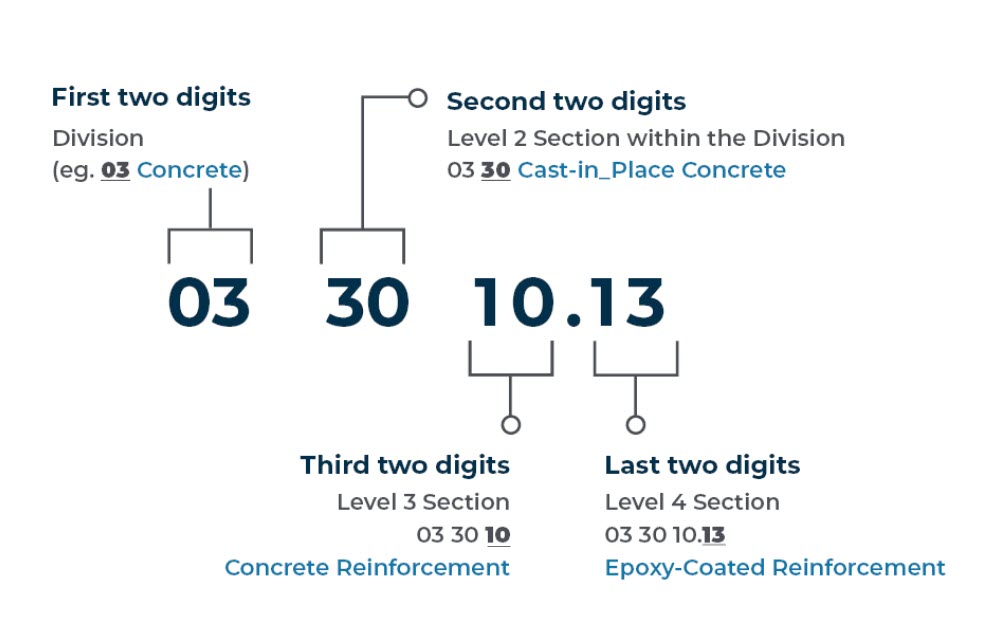
Think of a MasterFormat number like a code. Each pair of digits adds another level of detail, from broad categories to very specific materials or tasks.
Let’s break down a simple example: 03 30 10.13
Looks like random numbers? It’s not. That’s MasterFormat speak for a very specific item in the concrete division. The structure helps break complex info into clean, logical chunks.
Check it out:
Not every project needs eight digits. Sometimes, less is more. But when you do need that extra detail, the system scales with you. Whether you're mapping out a massive commercial build or just specifying one material, it keeps your documentation sharp and consistent.
And here’s the real benefit: once you get the hang of it, MasterFormat makes your job easier. You can navigate specs faster, stay organized, and keep confusion off the job site, which is a win for everyone.
Why Deeper Mastery Matters
Let’s be real: labor shortages aren’t going anywhere soon. Crews are stretched thin, timelines are tighter than ever, and every hour on-site needs to count.
That’s where MasterFormat steps up.
By clearly outlining scopes of work, it helps teams avoid the usual chaos, no more guesswork, no overlapping responsibilities, and less rework. Everyone knows their role from the start, so projects keep moving, even with leaner crews.
According to the 2025 AGC survey:
- 92% of construction firms say they’re struggling to find qualified workers
- Nearly one-third are facing project delays because of it
If you’re trying to do more with less, mastering how to use MasterFormat isn’t just helpful; it’s a competitive edge.
Want more insight on what these workforce challenges mean for your business? Check out our full article on how labor shortages are slowing down construction projects.
Cleaner Bids, Fewer Surprises
When everyone’s working from the same playbook, things just run smoother. That’s what MasterFormat brings to the table: a crystal-clear scope of work for every trade involved.
For general contractors, this means bids are way easier to compare. Why? Because all the subs are quoting off the same structure. No weird gaps. No buried line items. Just clean, side-by-side comparisons.
For subcontractors, it cuts out the guesswork. You know exactly what you’re expected to cover, and just as important, what you’re not. That kind of clarity keeps bids sharp, scopes tight, and everyone aligned from the jump.
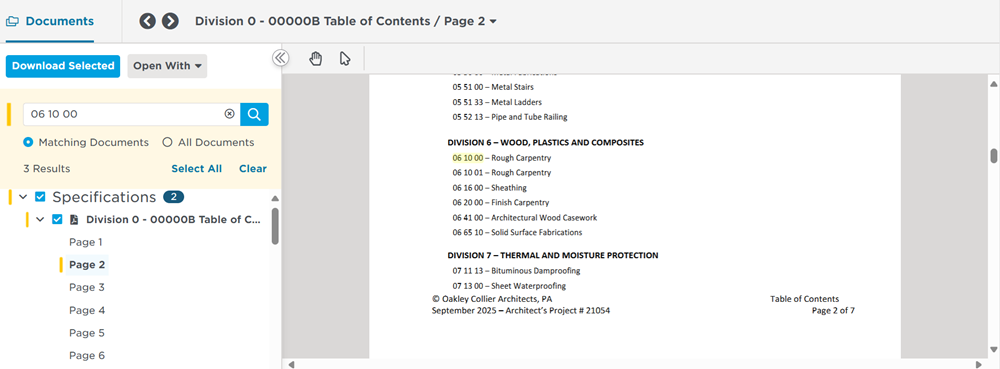
Tools like ConstructConnect Project Intelligence take it a step further. You can:
Search projects by your specific trade:
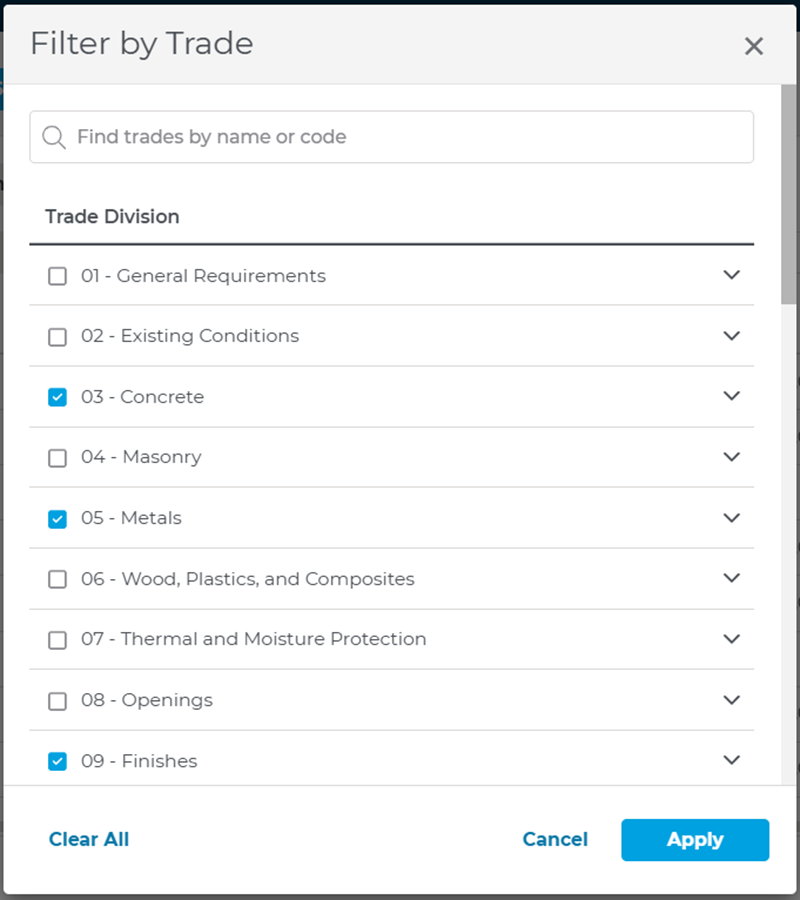
Use the Document Viewer to skip right to the pages that mention your work.
See MasterFormat codes highlighted throughout the docs:
That clarity isn’t just theory; it’s something industry leaders are already putting to work, like Brad Latham at Diversified Construction:
“ConstructConnect helps our bid solicitation process. It gives us confidence because we get multiple bids for the same scope. We're able to get better pricing for our owners.”
— Brad Latham, President of Diversified Construction
Sharper Estimates, Smarter Planning
Now that you've zeroed in on the right project, it’s time to move fast. With tools like On-Screen Takeoff® and Takeoff Boost™, you can start building your takeoff in minutes, not hours.
The system sorts project details by type using MasterFormat codes. That means your tasks and materials are grouped the same way they are in the specs, from concrete to electrical and everything in between.
You’ll still need to confirm those codes match the specs, but once they do, you’re working from a clean, structured foundation.
With less manual work (and fewer errors), you get:
- Fast, organized takeoffs
- A smoother path from estimating to execution
- More accurate, confident bids
In short: better planning, sharper estimates, and more wins.
Try it for yourself here
Ready to Learn More?
MasterFormat isn’t just a fancy number system, it’s the framework that keeps modern construction projects running smoothly. If you’re serious about building smarter, this is something you want in your toolbox.
If you’re coming from a residential background or just stepping into commercial construction, getting comfortable with MasterFormat is a solid first move.
To help with the learning curve, grab our free Residential to Commercial eBook. It’s packed with real-world advice to help you hit the ground running. You can download your copy here.
Mastering MasterFormat might sound like a big task, but these tools make it way easier. And once you’ve got it down, it’s a serious advantage, whether you’re estimating, bidding, or managing the build.
You're not just learning a system. You’re building a stronger foundation for your business.