CONSTRUCTCONNECT® VS. PLANHUB®

ConstructConnect vs. PlanHub:
An Honest Comparison for Contractors

Find commercial projects earlier with verified project data and connected preconstruction tools, or keep things simple with a lightweight bidding dashboard. This page walks through how ConstructConnect® and PlanHub® compare so you can decide what fits your team best.

G2 Star Rating G2 Star Rating
What’s New in CCPI_CC Analytics-1
Scroll Down

Quick Answer: How ConstructConnect and PlanHub Compare 

ConstructConnect is best for contractors who want earlier visibility into upcoming work, broader coverage of public and private commercial projects, and integrated tools that can connect your project discovery process to bid management and/or takeoff and estimating. It’s a strong fit for teams that treat preconstruction as a data-driven, repeatable process. 

PlanHub is best for subcontractors who mainly want a straightforward dashboard of projects that are already out for bid in their service area. It’s pricing also follows the geographic radius where you work. 

Both platforms are widely-used construction bidding and preconstruction software that let general contractors send bid invitations to subcontractors at no additional cost. However, they focus on different points in the preconstruction workflow: ConstructConnect adds early-stage project discovery and market intelligence across both the public and private sectors, while PlanHub emphasizes active private bids for subcontractors who prioritize a near-term bidding dashboard over broader market data

ConstructConnect vs PlanHub: Side-by-Side Comparison

The table below summarizes publicly available information as of early 2026. Project counts, network sizes, and pricing can change, so always confirm details with each provider.

Question
ConstructConnect
PlanHub
Which project stages can you see?
Commercial project database, bid management, lead generation, digital takeoffs and estimates
Primarily projects that are already actively out for bid.
Can you see projects before they go out for bid?
Yes. Many projects appear during planning and design months before bids are requested.
Limited. The experience centers on projects that are currently out for bid.
What types of projects are covered?
Public and private commercial construction across North America, with researcher-supported project records.
Private commercial projects that participating general contractors post on the platform.
Does it include public/government projects?
Yes. Includes public, institutional, and government work in addition to private projects.
Little to no public or government project coverage; the focus is on private GC-posted projects.
How broad is private commercial coverage?
Broad coverage that combines GC-posted work with researcher-sourced project leads across markets.
Coverage is limited to projects posted by participating general contractors and can vary by region.
How do subcontractors receive bid invitations?
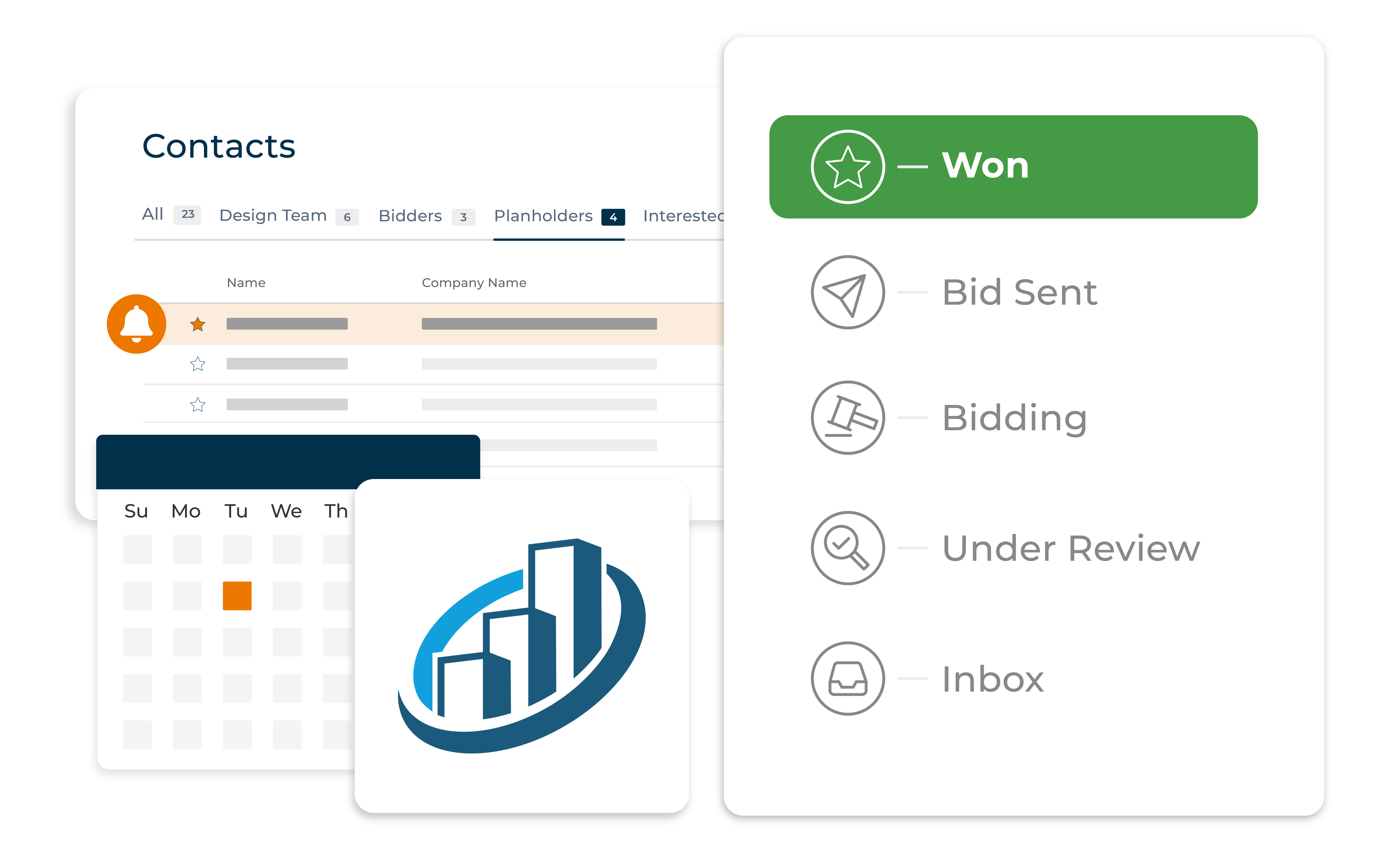
Network of general contractors sending invitations that subcontractors can view and manage through free Bid Center experience.
Network of general contractors posting projects and inviting subcontractors to bid within the platform.
Are takeoff and estimating tools included?
Integrated takeoff and estimating tools, including options with AI-assisted quantity measurement to reduce manual work.
Built-in takeoff and estimating tools are oriented toward quick measurements and simple estimates.
Is competitive or market intelligence available?
Yes. Provides bidder lists, award history, and market analytics designed to support go/no-go decisions.
Offers less depth in competitive intelligence compared with platforms that emphasize project research.
What does entry-level pricing look like for subs?
Free option for managing GC bid invitations, with paid plans for broader project discovery starting at an entry-level monthly price point.
Paid subcontractor plans typically priced annually based on service radius (for example, 50, 100, or 200 miles).
Which contractors is each platform best suited for?
Data driven teams, small and midsized contractors who want to grow, and multimarket firms that want a connected preconstruction workflow from discovery through takeoff and estimating.
Smaller subcontractors and local firms that mainly want a simple dashboard for tracking active bid opportunities.
CONSTRUCTCONNECT VS. PLANHUB®

See why 100,000+ Construction Pros Trust ConstructConnect for Accurate Construction Project Data

Get more projects, access verified leads, and leverage takeoff, estimating, and bid management tools that give you a complete preconstruction workflow. The smarter and more powerful option than PlanHub, without hidden costs or limitations.

Competitor 8

Why ConstructConnect is the top choice for construction pros.

Real Data, Real Results

Our 400+ researchers update our database daily through detailed analysis and personal outreach. You get bidders lists, awards, and full project scope—not just user-submitted basics.

No Hidden Costs

Clear, straightforward pricing with all features included. Unlike PlanHub, you won't hit paywalls for takeoff tools, unlimited downloads, or analytics. Everything you need, one price.

Accurate & Organized

Every file is properly labeled and indexed by CSI codes. No more wasting time sorting through mislabeled documents or missing attachments like you might with PlanHub.

Seamless Integration

Works perfectly with tools like On-Screen Takeoff (OST) and connects with 575,000+ construction companies. Your workflow stays smooth, your network grows stronger.

Why ConstructConnect

Where ConstructConnect Stands Out

  • Premier Data

    Researcher-Supported Project Data

    ConstructConnect combines broad digital data collection with a dedicated research team that verifies key dates, contacts, documents, and project phases across a large active project base.

    What this means for you: You can see more complete and current opportunities in one place instead of relying only on automated listings or unverified uploads, and it’s easier to spot which projects are still accepting bids so you don’t spend time chasing work that’s already closed or awarded.

  • Faster Bids

    Earlier Visibility into Upcoming Work

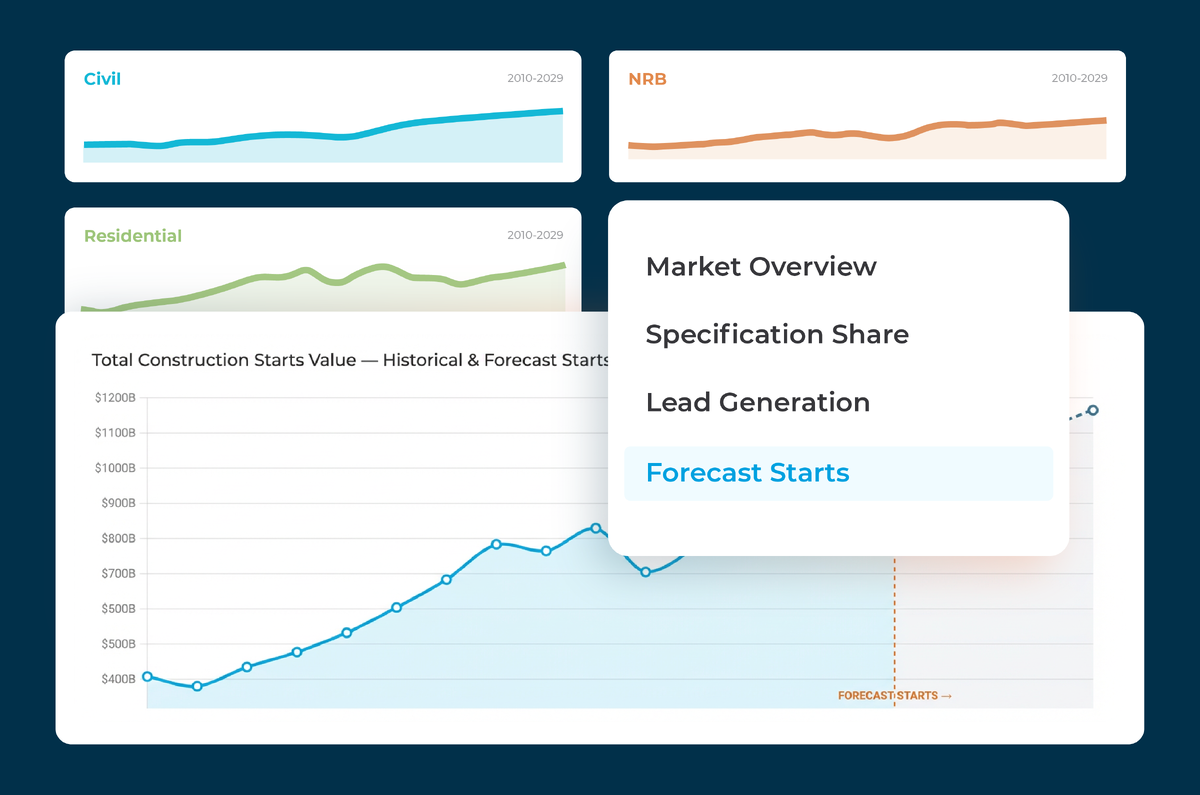
    ConstructConnect tracks projects from early planning and design through bidding. Many projects appear months before formal bid requests go out.

    What this means for you: You can identify work sooner, build relationships earlier, influence specifications where appropriate, and position your company before competitors join the bid stage.

  • AI-Powered

    Integrated Takeoff and Estimating Tools

    Project discovery connects directly to takeoff and estimating within the same ecosystem -On-Screen Takeoff®, PlanSwift®, and Quick Bid®- including options for AI-assisted measurements that reduce repetitive manual work.

    What this means for you: Your team can move from finding a project to reviewing plans, performing takeoff, and preparing an estimate in a connected workflow instead of jumping between disconnected tools.

  • MARKET DEFINING

    Competitive and Market Intelligence

    Beyond project listings, ConstructConnect includes bidder lists, award history, document search by CSI code, and market analytics.

    What this means for you: You can see who typically wins work in a market, understand how competitive a project may be, quickly identify when a project has moved past the active bidding stage, and decide whether an opportunity is worth investing in.

    Focused views on active bids: Filters by project stage, bid date, location, and trade help you narrow the full project database down to just the opportunities that are currently open and relevant to your business, so deeper data does not mean a cluttered bid board.

Trade-Off to Consider

Because ConstructConnect offers deeper project data and more integrated tools, onboarding can involve more training than a lightweight bidding dashboard.

For many teams, that extra depth is a benefit because it supports more of the preconstruction workflow in one place. For contractors who mainly want a quick view of what is currently out for bid, PlanHub’s simpler interface may feel lighter, while ConstructConnect’s broader toolset asks for a bit more learning up front in exchange for more connected data and tools.

Where PlanHub Stands Out

  • Simple, Easy-to-Learn Interface

    PlanHub is known for a clean dashboard and a short learning curve from sign-up to first bid.

    What this means for you: Smaller teams can get up and running quickly without a lengthy onboarding process or a complex configuration.

  • Focus on Active Private Bids

    The platform centers on projects that general contractors are actively posting and seeking bids for, rather than early planning stages.

    What this means for you: You can log in and quickly see private projects that are currently out for bid in your service area.


  • Mileage-Based Pricing for Subcontractors

    Subcontractor plans are typically structured by service radius (for example, 50, 100, or 200 miles), with pricing tied to the territory covered.

    What this means for you: It makes it easy to match your subscription cost to the area where you work.

  • Free Project Posting for General Contractors

    On PlanHub, general contractors can post projects without a subscription, which helps drive GC participation in markets where the platform is already established. On ConstructConnect, subcontractors can similarly receive and manage GC bid invitations through a free account.

    What this means for you: In regions where GC adoption is strong, subcontractors may see a consistent stream of active bid opportunities.

Trade-Off to Consider

For many smaller subcontractors, PlanHub’s emphasis on active bid opportunities and a simpler interface also means less detail on early planning stage projects and broader market activity.

For teams that mainly want a straightforward bidding dashboard and are less focused on early-stage discovery, that trade‑-‑off of less depth and more simplicity may be exactly what they want.

At a Glance

When Each Platform Is the Better Fit

Choose ConstructConnect if you want to: Choose PlanHub if you want to:
You want access to a broad database of public and private commercial construction projects across multiple regions.
You want a simple interface with a short learning curve.
You need to identify projects during planning and design, before they are released for bid.
You prefer pricing based on a service radius that aligns with the geographic area where you work.
Your team relies on dedicated takeoff and estimating tools as part of the preconstruction process.
You mainly want to see private projects that are already out for bid in your service area.
You use bidder lists, award history, or market analytics to evaluate which opportunities to prioritize.
You are already receiving GC bid invitations through the platform and want a central place to manage them.
Your company operates in one or more markets and needs consistent, research- supported coverage, with subscription tiers that fit small, midsized, and large contractors.
You prioritize ease of use and speed to first bid over deeper market data and early-stage discovery.
You prefer a workflow that connects project discovery, document review, takeoff, estimating, and bid preparation, backed by dedicated support and both in-person and on-demand training to help your team get value quickly.
You’d rather get up and running independently in a lighter, self-serve bidding dashboard than invest time in onboarding for a broader end-to-end preconstruction workflow.
Can you use both platforms?

Yes. Many contractors use both platforms for different parts of the preconstruction workflow. A common approach is to:

Use ConstructConnect for

  • Broader project discovery, earlier-stage opportunities, and integrated takeoff or estimating.

Use PlanHub for

  • Receiving and managing bid invitations from general contractors in markets where it is already widely used.
This approach provides visibility into what is out for bid today while also supporting longer-term pipeline development. The trade-off is that your team will need to manage more than one system.

From bid to build, ConstructConnect helps you win at every stage.

0K+
Active Commercial Construction Projects
0
Metro Areas Covered
0+
Dedicated Researchers
0K+
Trusted Platform Users

Don't Just Take Our Word For It - See What Our Customers Are Saying

"Best platform on the market in terms of data accuracy and availability. Wouldn't choose another platform over ConstructConnect."

"ConstructConnect definitely has a lot more opportunities than any other competitors out there. They get all the public and private jobs."

"If I'm doing research on a project, ConstructConnect is the first place for information, because it has always been reliable and accurate."

FREQUENTLY ASKED QUESTIONS

How ConstructConnect Compares to PlanHub

Is ConstructConnect better than PlanHub?

It depends on how you plan to find and pursue projects. 

ConstructConnect emphasizes broader project discovery, earlier-stage visibility, and integrated preconstruction tools. PlanHub focuses on helping subcontractors receive and manage bid invitations for private projects that are already out for bid. 

Contractors who want earlier visibility and richer project data often lean toward ConstructConnect, while those who mainly want a simple bidding dashboard may prefer PlanHub. 

Is ConstructConnect more expensive than PlanHub?

Pricing depends on the level of access and tools you need. ConstructConnect offers a free account for all contractors. Paid plans start at $129/month (month-to-month) and $199/month (annual contract). PlanHub charges annually by service radius.

Is ConstructConnect free for subcontractors?

Yes, at a basic level. Create a free account to receive and respond to GC bid invitations. Paid plans start at $129/month month-to-month or $199/month annual. Unlock project discovery, market analytics, and integrated takeoff tools.

Does PlanHub cover public or government construction projects?

Public and government coverage is limited. 

PlanHub primarily focuses on private commercial projects posted by participating general contractors, with little to no emphasis on public or institutional work. 

ConstructConnect, by contrast, is designed to cover both private and public construction, including government and institutional projects. 

Which platform is better for finding projects early?

In most cases, ConstructConnect provides earlier project visibility. 

Its project database includes planning and design stages, which can surface opportunities months before formal bidding begins. PlanHub concentrates on projects that are already out for bid, so it is stronger for managing near-term bidding activity than for early stage pipeline development. 

How does data quality compare between ConstructConnect and PlanHub?

Each platform uses a different model for collecting and maintaining project data. 

ConstructConnect combines automated data collection with a research team that verifies project details, contacts, and documents. This research layer is intended to keep records more complete and up to date across many markets. 

PlanHub primarily relies on information submitted directly by participating general contractors. That approach can work well where GC participation is strong but may provide a narrower view of the overall market. 

Does ConstructConnect have a general contractor network like PlanHub?

Yes. Both platforms connect subcontractors with general contractors who send bid invitations. 

ConstructConnect includes a large GC network that uses the platform to invite subcontractors to bid on projects, while PlanHub allows GCs to post projects and invite subs directly as well. The main difference is that ConstructConnect layers this GC network on top of broader project discovery and research-supported data. 

Note: All feature descriptions, numbers, and pricing ranges are based on information commonly cited as of early 2026. Always confirm current details with ConstructConnect and PlanHub before making purchasing decisions.