In short:
- The construction industry in 2025 experienced slower overall growth, but high-potential opportunities emerged in sectors like manufacturing, data centers, sports and convention centers, and airports.
- Mega projects (over $1 billion) surged, now representing a significant share of nonresidential construction starts and offering major growth pathways for firms.
- Persistent challenges—including rising labor costs, a shrinking workforce, and increased material prices—require businesses to focus on cost control and strategic resource allocation.
- To succeed in 2026, construction companies should target growth in expanding sectors and leverage industry data and resources to make informed, competitive decisions.
Success in the construction industry isn't just about hard work. It’s about making that hard work count. This means combining your effort with a smart strategy. Chief Economist, Michael Guckes, shared critical insights during the Bid Like a Boss: Strategies to Power Your 2026 Business webinar to help you do just that. He explored the economic landscape, highlighted specific construction trends, and offered a framework for next steps.
We’ll unpack the biggest takeaways from 2025 that are key to setting your business up for success in 2026. Use these takeaways as your roadmap for growth and resilience in the new year.
What is the Economic Outlook for Construction in 2026?
To make 2026 your best year yet, you have to understand the broader economic environment. After two years of nearly 3% growth, the U.S. economy is expected to slow. While this is not a recession, it signals a shift away from the rapid expansion we’ve seen in previous years.
Several factors contribute to this slowdown:
- Slowing Population Growth: A long-term trend of slower population growth directly impacts consumption and, consequently, economic expansion.
- Stable Interest Rates: The era of historically low interest rates appears to be over. We anticipate rates will hold more or less steady, meaning the cost of financing projects will remain a significant consideration for the foreseeable future.
For contractors, this moderate economic environment means that opportunities for growth will be more targeted. The most successful construction businesses will focus on identifying and pursuing projects in sectors and markets with the greatest potential. Targeted growth, rather than broad expansion, will be key to making the most of the opportunities that 2026 has to offer.
Where is the Growth Happening in the Construction Industry?
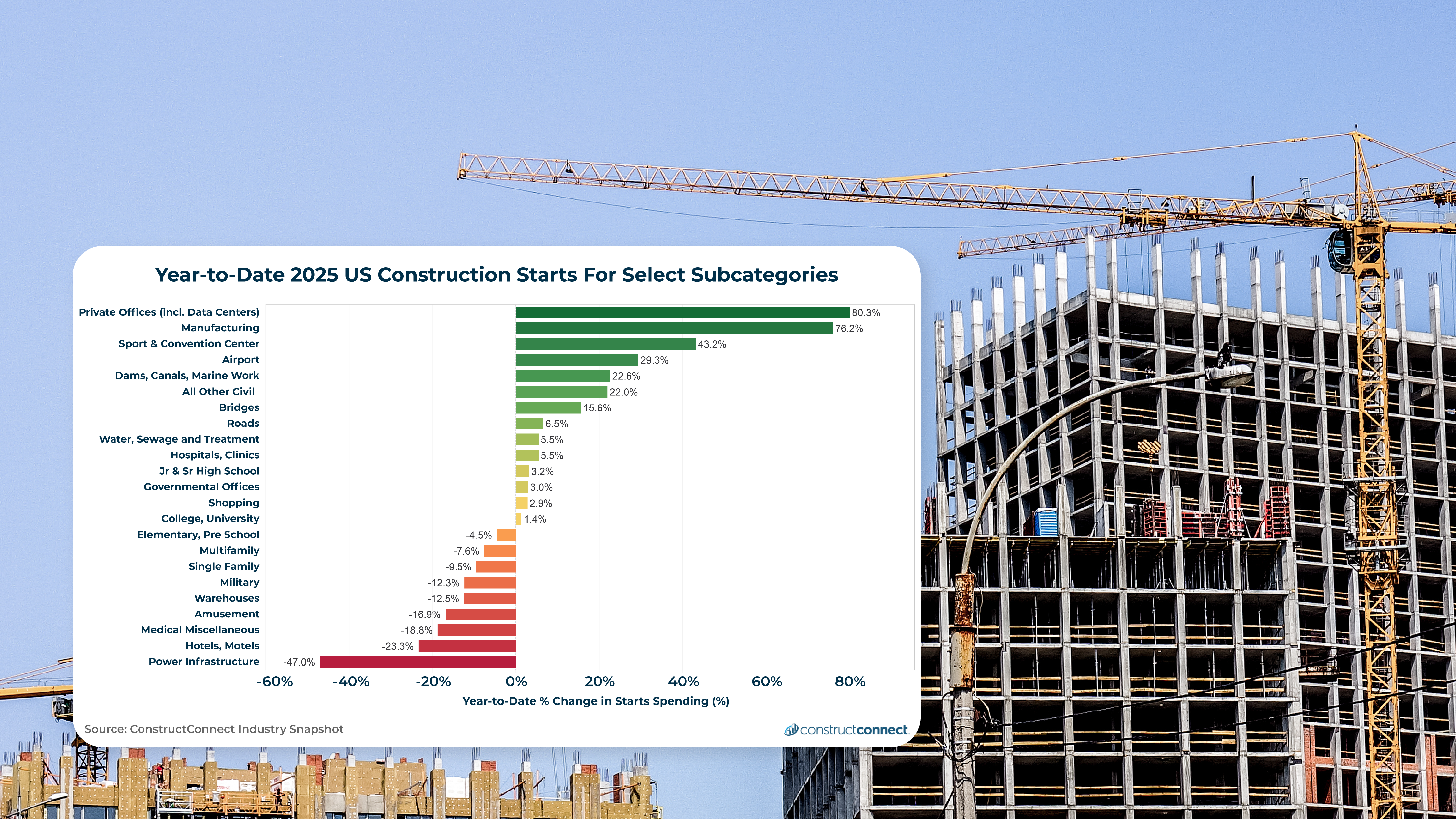
While total construction starts were up modestly last year, the underlying story is a landscape of sharp contrasts between expanding and shrinking segments. Understanding where the opportunities lie is the first step toward smart, strategic growth in 2026.
High-Growth Sectors
Our data tracks 33 different subcategories, and a clear pattern has emerged: about half are growing while the other half are contracting. This divergence underscores the importance of focusing your sales and marketing efforts where momentum is the strongest. By directing resources toward expanding segments and avoiding shrinking sectors, you’ll maximize returns on your efforts and position your business for greater success in the new year.

The strongest growth is happening in:
- Data Centers
- Manufacturing
- Sports & Conventions Centers
- Airports
Categories like power infrastructure, hotels, and certain medical facilities are experiencing a contraction. The key is to align your business strategy with the market’s momentum.
The Rise of Mega Projects Continues
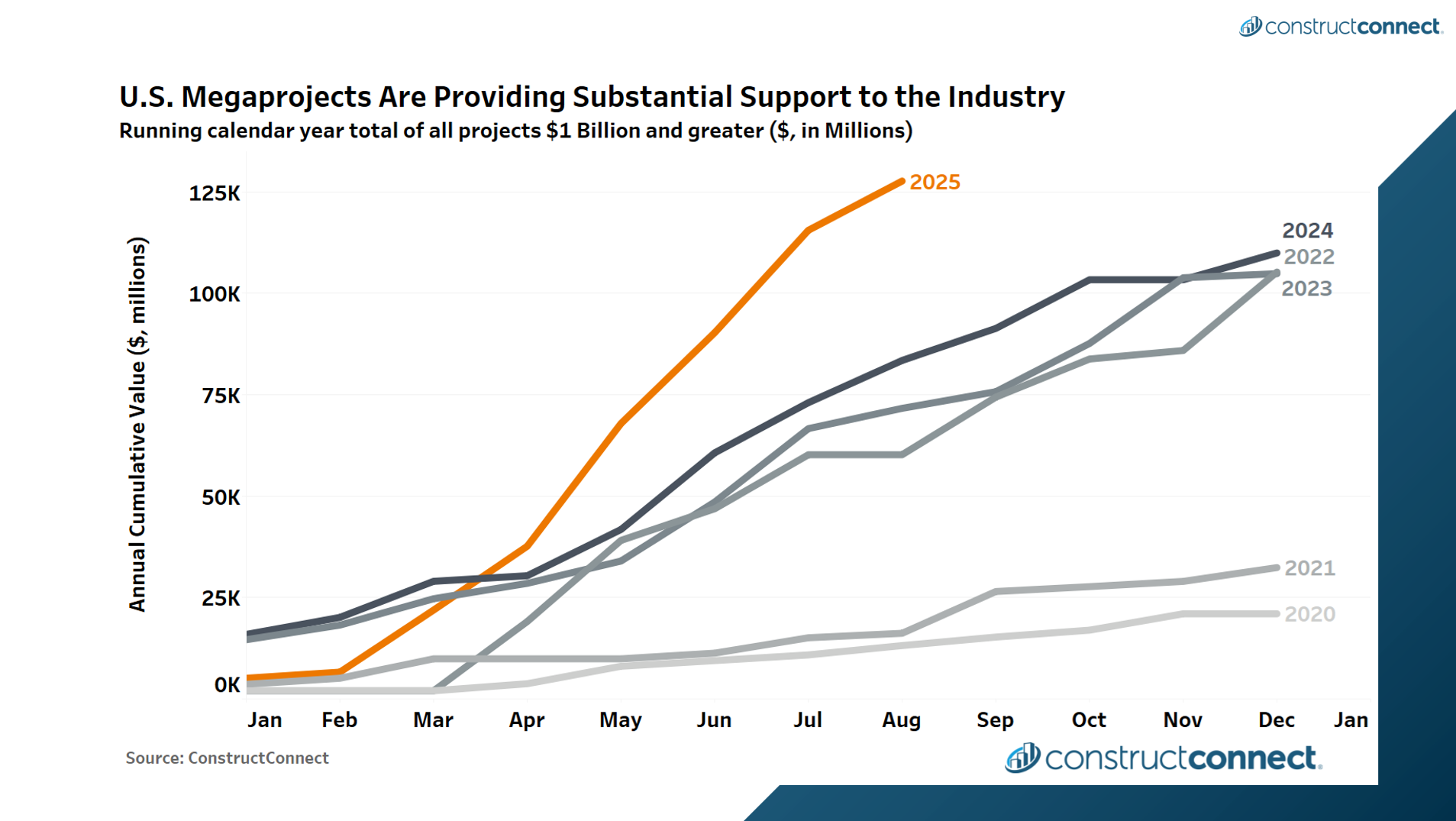
One of the most powerful trends shaping the industry is the surge in mega projects—those valued at over one billion dollars. In 2025, mega project spending rose by 47%, accounting for one in every five nonresidential start dollars. This is a big increase from 2022, when it was one in every ten.
These mega projects are not evenly distributed. They are heavily concentrated in industrial, civil, and commercial construction. As you move into 2026, engaging with the momentum of mega projects can open substantial growth pathways for your business.
How Can Construction Firms Control Costs in 2026?
2025 trends make it clear that controlling costs is essential for achieving profitability in 2026. Understanding market conditions is only part of the equation. Your ability to actively manage costs—especially with ongoing pressures in labor and materials—will determine your competitive edge and financial outcomes in the year ahead. Two primary factors are creating major cost pressures for construction firms today: labor and materials.
The Labor Challenge is Here to Stay
The upward trajectory of wages seen in 2025—with year-over-year growth holding steady above 4%—will continue to shape the construction industry in 2026. This is driven by a shrinking labor pool and increased competition for skilled workers. The situation is particularly acute in construction, which is more sensitive to the availability of foreign-born workers than any other industry. According to recent U.S. Census data, nearly 34% of all construction workers are foreign born. Surveys also show that roughly half of these workers are classified as “unauthorized.” That puts as much as 20% of the entire construction workforce at risk if policies change.
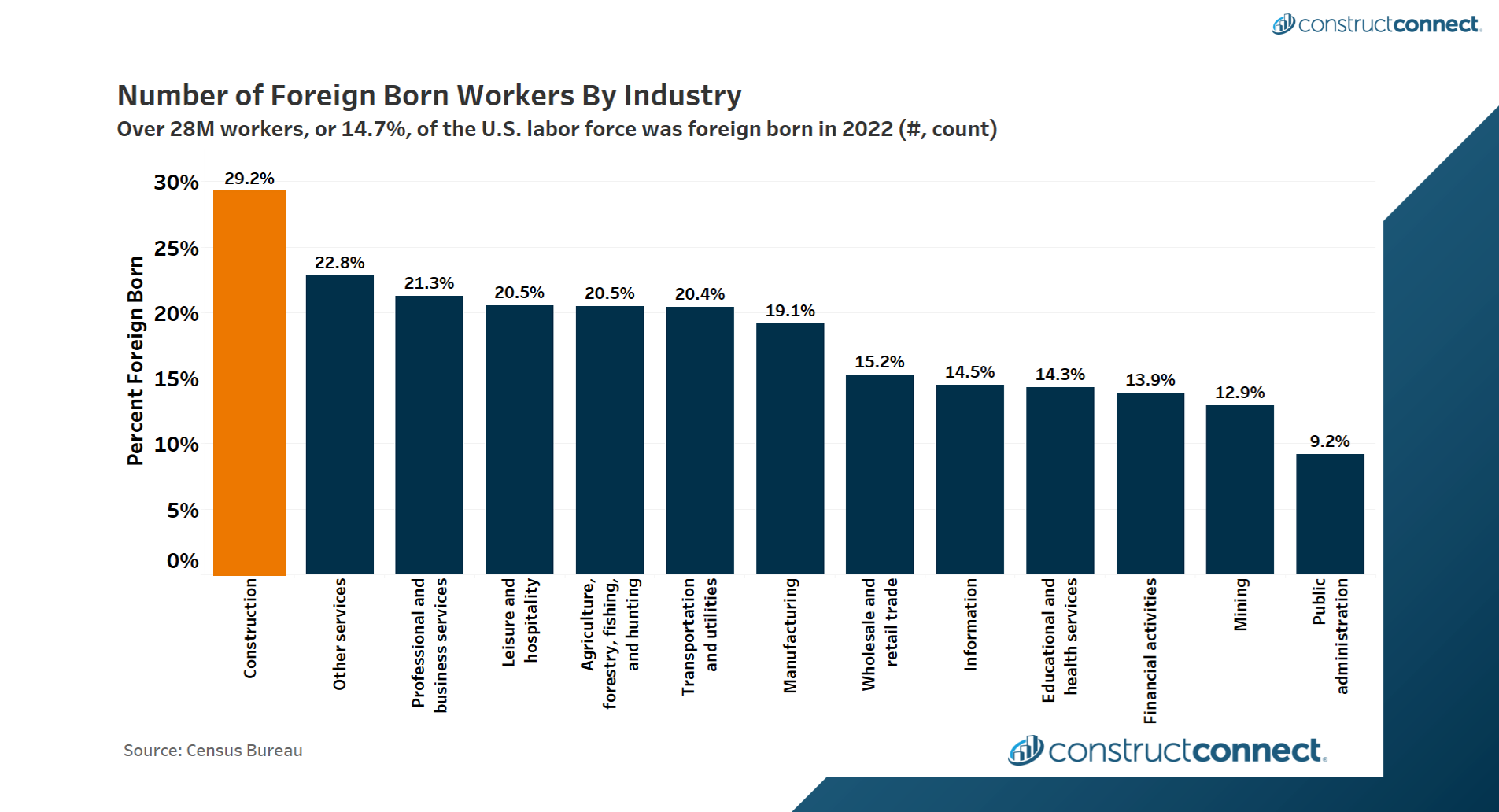
A potential reduction in the available labor force will only intensify the competition for workers, not just within construction but from other industries like agriculture and transportation. Protecting your labor force will be one of your biggest challenges in the coming years.
Rising Material Prices Impact Profit Margins
The surge in material prices during 2025—rising 5.2% year-over-year—will have a direct impact on project margins as you move into 2026. Factors like international tariffs and evolving supply chain dynamics are contributing to this volatility. These price hikes can quickly erode project margins, making accurate cost estimation and management more critical than ever.
Steps for Smarter Decisions in 2026
The most important step you need to take as you enter 2026 is translating the lessons and insights gained from 2025 into action that sets your business apart in the new year. By applying what you’ve learned about market dynamics and cost management, you’ll be better equipped to not only navigate challenges, but also outpace competitors in the year ahead.
Leverage these free resources by ConstructConnect to stay ahead of trends and make informed business decisions:
- Construction Economy Snapshot: For over 20 years, the Construction Economy Snapshot has tracked monthly starts and market trends, delivered with economist commentary and analysis.
- Construction Starts Forecast: This quarterly report delivers a five-year construction starts forecast, offering analysis and insights grounded in the industry’s most comprehensive project data.
- ConstructConnect Expansion Index: Use the ConstructConnect Expansion Index to get insights into industry growth, demand forecasting, and resource planning, enabling better bidding strategies, financial decisions, and competitive positioning.
- Project Stress Index: The Project Stress Index is a rolling measure of preconstruction projects delayed, abandoned, or placed on hold over the last 30 days. The Index is an early indicator of possible headwinds for the U.S. construction market.
- ConstructConnect News: The premier news and economic source for trade contractors, building product manufacturers, and general contractors in nonresidential construction.
Take the first step toward a more strategic 2026. Explore our free economic resources today to gain the clarity and confidence you need to build a stronger, more resilient business.