In short:
- Manual project search, disconnected systems, and hand-drawn takeoffs slow contractors down by adding repetitive work, hidden re-entry, and a higher risk of errors that cut into profit.
- ConstructConnect Project Intelligence® (CCPI) lets you quickly find well-matched commercial projects and verified contacts instead of chasing dead ends.
- On-Screen Takeoff® with Takeoff Boost™ automates large portions of the takeoff process, cutting estimate time by up to 95% on supported pages while maintaining accuracy.
- Connecting project discovery (CCPI) with digital takeoff and estimating (On-Screen Takeoff with Takeoff Boost) creates a smoother, more efficient workflow from first search to confident bid.
- Contractors can further optimize their lead generation and estimating processes by using ConstructConnect’s Contractor’s Guide series for step-by-step strategies.
How do manual processes slow down your contracting business?
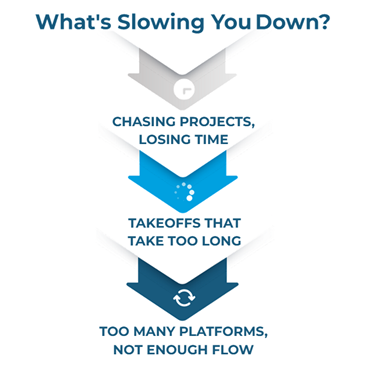
Manual processes eat up your day with repetitive, low-value work like chasing projects across different sites, retyping the same details into multiple tools, and sketching takeoffs by hand on printed plans. All that extra effort adds delays and opens the door for mistakes that can drag down win rates and margins.
When your tools are connected and digital, it’s a different story. Project information lives in one place, large chunks of takeoff work are automated, and the handoff from lead to estimate is much smoother. Those changes help your team move faster and stay accurate, without sacrificing profit.
What’s really slowing contractors down?
For many contractors, the problem is not their people—it’s their process.
A typical day disappears into:
- Manually hunting for projects across multiple sites and emails
- Digging through incomplete documents for key details
- Struggling to find reliable owner, architect, or GC contact information
- Redoing work as project details change
By the time someone lands on a promising opportunity, they’re already behind. Then the estimating grind starts: manual takeoffs, spreadsheets, recounts, and revisions. Each step eats up time and raises the risk of missed scope or miscalculations that can cost you the job, or your profit.
On top of that, teams often juggle separate tools for project data, plan viewing, and estimating. Every switch between systems introduces friction, duplicated data, and the chance something falls through the cracks. The outcome is a disjointed workflow that feels slow and stressful, even when everyone is working hard.
It’s not that the team is inefficient. It’s that manual, disconnected processes are holding them back.

How does ConstructConnect Project Intelligence® help you find better work faster?
ConstructConnect Project Intelligence® is designed to replace the manual project hunt with a targeted, data-driven search.
With Project Intelligence, contractors can:
- Access more than 825,000 active commercial projects
- Tap into over 575,000 verified contacts so outreach doesn’t stall
- Filter projects by location, project type, value, status, and more
Instead of chasing scattered leads, you can quickly focus on opportunities that fit your specialties, preferred geographies, and capacity. That means less time wasted on dead ends and more time spent on high-probability work.
Because project details and contacts live in one place, it’s easier to qualify opportunities, prioritize your pipeline, and keep everyone on the same page as projects move from discovery into estimating.
How do On-Screen Takeoff® and Takeoff Boost™ speed up estimating?
Once you’ve identified the right project, On-Screen Takeoff® with Takeoff Boost™ accelerates the estimating process.
Here’s how it helps:
- Takeoff Boost can automate counts on up to five pages of plans in as little as 30 seconds per page
- Contractors can reduce time spent on estimates by up to 95% on those pages
- Senior estimators can shift focus from manual counting to strategy, risk management, and margin protection
- Junior estimators gain a faster way to learn by checking and verifying automated results instead of starting from scratch
Digital takeoff tools replace hand-drawn measurements and manual recounts with consistent, repeatable workflows. The result is faster turnaround, fewer errors, and estimates that better reflect the actual scope of work.
Why is connecting project discovery and estimating so important?
The biggest gains come when your project intelligence and takeoff tools work together in a connected workflow.
When Project Intelligence and On-Screen Takeoff with Takeoff Boost are integrated, contractors can:
- Move directly from “this looks like the right job” to “here’s a confident, competitive estimate”
- Avoid re-entering project information into separate systems
- Keep project context, documents, and measurements tied together
This connection reduces administrative overhead, shortens bid timelines, and lowers the risk of data loss between steps. It also makes it easier for teams to collaborate, review, and update estimates as project details evolve.
Instead of patching together a process with point solutions and spreadsheets, you get a streamlined path from lead to proposal.
How can contractors learn more ways to optimize leads and estimates?
The blog you’re reading is just a starting point. ConstructConnect has created a dedicated resource to help contractors build more predictable, profitable pipelines and estimating workflows.
You can download The Contractor’s Guide to Generating Profitable Leads and Estimates, which dives deeper into:
- Structuring a repeatable lead generation process
- Qualifying opportunities before you invest in a full bid
- Using tools like CCPI and On-Screen Takeoff to improve speed and accuracy
- Protecting margins while staying competitive on price
This guide is the third installment of ConstructConnect’s “The Contractor’s Guide to…” series, which also includes:
- The Contractor’s Guide to Adopting Software with Ease
- The Contractor’s Guide to Finding Better Projects, Faster
Together, these resources help contractors modernize their workflows—from choosing software, to finding better-fit projects, to generating accurate, profitable estimates.
You can visit this page to get all three.

Frequently Asked Questions (FAQ)
How do I know if manual processes are hurting my contracting business?
If your team regularly works late to finish bids, struggles to keep up with project changes, or spends hours searching for projects and contacts, manual processes are likely slowing you down. Frequent rework, missed bid deadlines, and inconsistent estimates are also strong warning signs.
What types of contractors benefit most from Project Intelligence and On-Screen Takeoff?
General contractors, specialty trades, and suppliers involved in commercial construction all benefit from faster project discovery and estimating. Firms that pursue a steady volume of bid work or operate across multiple regions often see the biggest time savings with these tools.
Can I still control accuracy if I use automated takeoff tools?
Yes. Takeoff automation is designed to handle repetitive counting and measurements, while estimators review, adjust, and validate the results. This combination of automation plus expert oversight improves both speed and accuracy compared to purely manual methods.
How does better project intelligence improve win rates?
When you can quickly filter by project type, size, location, and status—and see verified contact information—you can focus on opportunities that match your strengths and capacity. Targeting better-fit work typically leads to higher win rates and stronger margins than chasing every available project.
Why should I use a guide like The Contractor’s Guide to Generating Profitable Leads and Estimates?
A structured guide gives you a clear framework instead of relying on trial and error. It walks you through proven approaches to generating leads, qualifying opportunities, and building estimates, so you can systematically improve your process rather than making isolated tweaks.

.png)