In Short:
- Taking off construction plans manually is time-consuming and error-prone, forcing many estimators to work nights and weekends just to keep up.
- Manual takeoff is a hidden growth cap: it limits how many bids you can pursue and increases the risk of costly errors.
- AI-powered tools like On-Screen Takeoff® with Takeoff Boost™ can reduce takeoff time by up to 95%, freeing as much as 36 hours per week for higher-value work.
- Reinvesting those hours into more bids, better analysis, stronger relationships, mentoring, and true time off can transform both your business and your quality of life.
- Stop counting. Start competing. The firms that embrace construction technology and digital transformation today will dominate the industry tomorrow.
The Problem: It’s 9 p.m. and You’re Still Working
It's 9 p.m. on Thursday. You're on page 47 of 89, tracing your third wall assembly of the evening, and the bid is due tomorrow at noon. Your daughter's recital started an hour ago. Your coffee's gone cold. And you still have the ceiling grid, doors, and finishes to count.
This isn't occasional overtime. This is Tuesday, Wednesday, Thursday, and most Fridays.
For many estimators, this is just "how it is." But it doesn't have to be.
The Problem: Manual Takeoff as a Growth Limitation
Traditional quantity takeoff is simple in concept but punishing in practice:
- Open the plan set, set the scale, trace walls, count doors, measure floors and ceilings
- Repeat across alternates, levels, and revisions until the scope is covered
On large or complex projects, this can take days or even weeks! The results:
- Limited bid capacity. If taking off one project eats up four days, you're capped at one major bid a week unless you work overtime.
- Higher risk of errors. Fatigue plus repetition is a dangerous combination when a single missed component can swing a bid by thousands.
- Growth ceiling. Your revenue potential is directly limited by how fast your team can count and measure.
Digital tools helped move this work off paper, but the underlying process didn’t really change. Many estimators are still doing all the measuring one click at a time. They’re just doing it on a screen instead of with a scale ruler.
Modern construction estimating software and construction technology solutions are built to streamline these steps, cutting manual measuring and the human-error collisions that come with it. See the related blog post, Finish Your Estimating up to Ten Times Faster using Typical Takeoff where we cover some of the advanced tools available to make digital takeoff faster while cutting down on mistakes.
The Real Cost of Manual Takeoff
Here's what a typical week looks like for estimators still doing manual takeoff compared to AI-assisted takeoffs:
|
Activity
|
Hours/Week (Manual)
|
Hours/Week (With AI)
|
|
Measuring quantities
|
32 hours
|
3 hours
|
|
Validating & adjusting
|
2 hours
|
8 hours
|
|
Cost analysis & pricing
|
6 hours
|
12 hours
|
|
Vendor negotiations
|
4 hours
|
8 hours
|
|
Client meetings
|
2 hours
|
5 hours
|
|
Strategic planning
|
0 hours
|
4 hours
|
|
Total productive hours
|
46 hours
|
40 hours
|
| The Outcome |
|
Bids completed
|
1-2
|
4-6
|
How Takeoff Boost™ Gives You Hours Back
Takeoff Boost, an AI-powered feature in On-Screen Takeoff®, changes the equation from "click faster" to "let the software do the clicking." Here’s how Takeoff Boost cuts your takeoff time by up to 95%:
- Reads your digital plans and scale
- Detects and measures rooms, areas, walls, ceilings, and counts like doors and fixtures
- Generates a full page of takeoff in 30-60 seconds, often across multiple pages at once
- Returns those results directly into On-Screen Takeoff for you to review and fine-tune
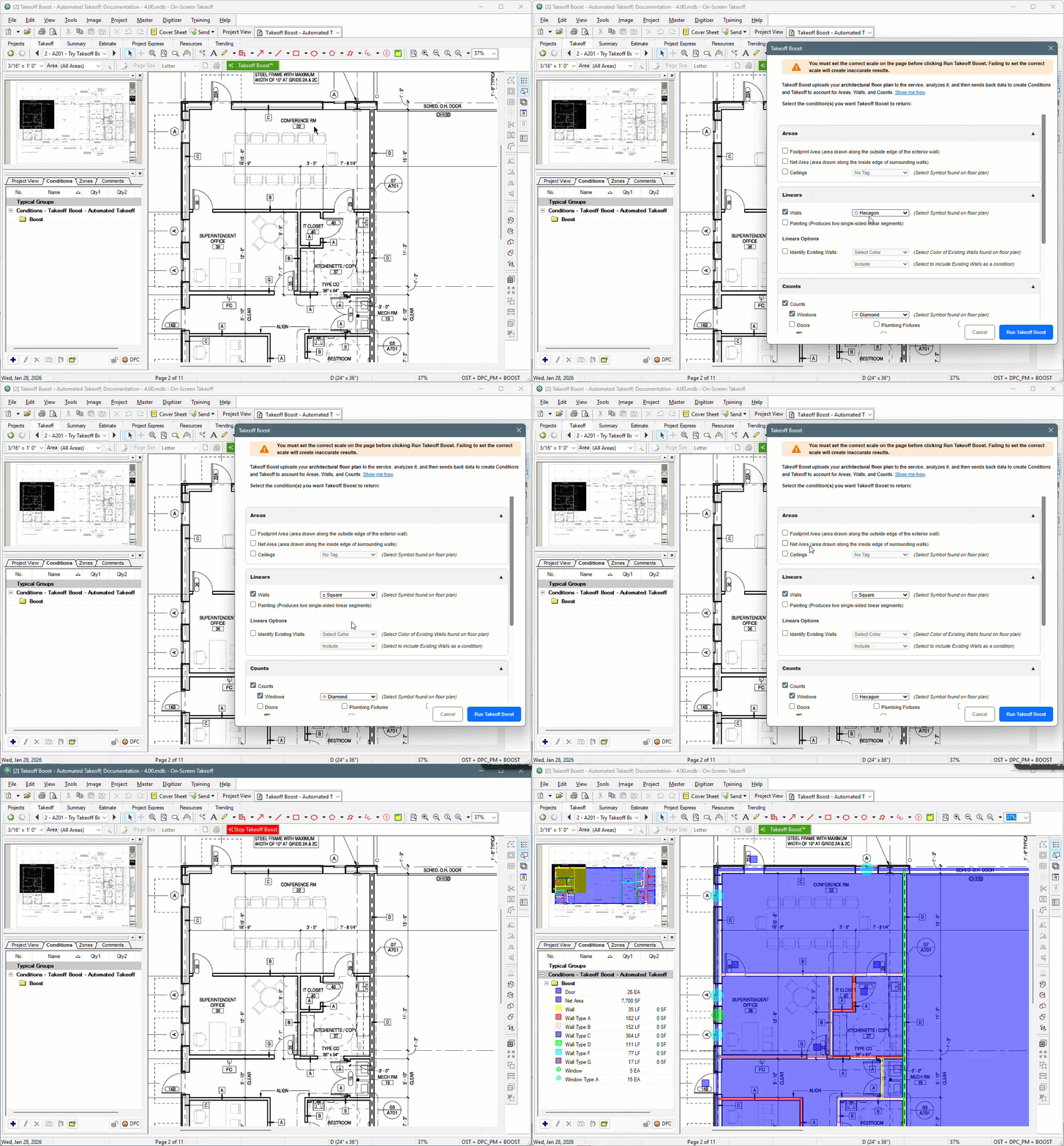
Instead of spending most of your week drawing takeoff, you spend a much smaller slice of time checking and adjusting what the AI produced. AI doesn't replace estimators—it frees them to estimate and grow their business.
You still own the estimate including costs, margins, and risk calls. AI just takes the mouse-clicking marathon off your plate.
Real-World Feedback
"For most jobs, I just load the plans into On-Screen Takeoff, press Takeoff Boost, and I'll do four or five projects in half an hour."
- Sheri Winslow, Lead Estimator, AKS Interior Systems
"I was able to do an initial takeoff on an 85,000-square-foot job in about 30 minutes with Takeoff Boost™. That is lightyears ahead of the competition."
- John Kulger, Owner and Chief Estimator at Nibbi Brothers General Contractors
What You Can Do with 36 Extra Hours
Once takeoff stops consuming your whole week, you have more time to focus on strategy and improving bids. The teams who see the biggest impact tend to reinvest that time in three places:
1. Bid More Work Without More Staff
If AI can handle most of the measuring, you can simply bid more of the right projects:
- Take on additional opportunities without hiring additional staff
- Respond to late-breaking invites and addenda without giving up your weekend
- Compete in an ever-tightening playfield and win
In a market where , increasing bid capacity without increasing headcount is a real competitive edge. This is construction workforce efficiency at its most impactful.
2. Improve the Quality of Every Bid (Margin Protection)
When you're not racing the clock just to finish counting, you can focus on the part of estimating that protects margins and drives bid confidence:
- Digging into specs and details instead of skimming
- Identifying value-engineering options that save the owner money and help you stand out
- Stress-testing your assumptions against current material and labor costs
- Running multiple scenarios to find the optimal pricing strategy
As one preconstruction leader put it in a related blog, “From Days to Minutes: An Estimator's Take on AI Takeoff, automating repetitive tasks allows teams to shift "from production-mode estimating to higher-value activities—like engaging with clients early, understanding their goals, and shaping meaningful solutions during the design phase."
Estimating accuracy stops being a goal you're chasing and becomes your default standard.
3. Invest in People—and in Your Own Life
Time savings don't just show up on the P&L; they show up in the lives of your team.
With hours back each week, you can:
- Mentor junior estimators. Senior staff can spend more time teaching strategy, risk analysis, and negotiation instead of how to trace lines
- Onboard faster. New hires can start by validating AI-generated quantities, then grow into full bid ownership over weeks instead of months
- Reduce burnout. Weekends stop being the "overflow" time for catching up on takeoff
Thirty-six hours a week is enough time to:
- Double your bid volume, and
- Train a new estimator, and
- Coach your kid's team AND have dinner at home five nights a week
You don't have to choose just one.
"Is It Worth It?": Trusting the Technology
Common concerns about AI takeoff sound familiar:
- Will it be accurate enough?
- Won’t AI make mistakes?
- Will it be hard to learn?
- Will it actually fit the way we work?
In practice, teams that put AI to work on real bids find:
- It fits into existing workflows. Takeoff Boost runs inside On-Screen Takeoff—no shipping plans to a third party or waiting days for a result
- AI isn’t perfect; it’s about getting you 95% of the way to the finish line, then letting you apply your expertise
- You stay firmly in control. AI handles extraction—measuring, counting, and categorizing. You validate, adjust, and price. This is construction digital transformation done right: technology serves you, not the other way around
- The ROI is clear. Even with some review and clean-up, the time saved compared to fully manual takeoff is so dramatic that going back feels unthinkable
Ready to Reclaim Your Week?
If you're tired of trading weekends for bid deadlines, it may be time to let AI handle the grunt work.
Your next steps:
- Explore On-Screen Takeoff with Takeoff Boost™ and see the technology in action
- Pair it with ConstructConnect® Project Intelligence to feed your pipeline with the right projects
- Turn "I wish there were more hours in the week" into a problem you've already solved
What would you do with 36 extra hours each week?
Frequently Asked Questions